
India needs to make use of this opportunity to significantly enhance its exports especially in information and communications technology and the automotive sector.

Prime Minister Narendra Modi on Monday slammed those calling agitating Sikh farmers names, saying it won't do the country any good as he went on to appeal to the protesting farmers to withdraw their over two-month-long stir and give the new agriculture reform laws a chance.

Record liquidity infusion by the central bank in the banking system during the financial year 2020-21 amid sluggish economic activity resulted in banks investing more in safe government papers than in extending loans, data from Reserve Bank of India (RBI) showed. This trend has not been seen in nearly two decades, barring 2016 - the year of demonetisation.
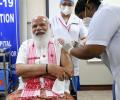
'He came back from the US only to work for his country.' 'He has invested his fortunes to build this company and is married to his work.' 'Rarely does one see such commitment.'

'We will be looking to prune our portfolio to make GIC Re a healthier entity.'

'The most important priority for the next 25 years should be to strengthen our democracy so that it is supportive of social harmony, and to not just respect but to take pride in the diversity of Indian society in terms of the variety of languages, religion and religious practices and social norms,' explains Nitin Desai.

'In the long run, the boost to farmers' incomes must come from technological breakthroughs,' says Pratap S Birthal and Digvijay S Negi.

Stressing that economic growth will only move upwards, the Reserve Bank of India Governor Shaktikanta Das on Friday pegged the GDP growth rate for the next financial year at 10.5 per cent, though a tad lower than the government's projection of 11 per cent. The projection is in line with the estimates in the Union Budget 2021-22 presented in Parliament earlier this week. The Economic Survey, tabled by the government in Parliament recently, has projected that the economy will grow at 11 per cent, up from an estimated historic decline of 7.7 per cent in 2020-21, on account of the COVID-19 pandemic.

Prime Minister Narendra Modi on Friday said production linked incentive (PLI) scheme, which is aimed at boosting domestic manufacturing and exports, is expected to increase the country's production by $520 billion in the next five years. Addressing a webinar on PLI scheme, organised by Department of Industry and International Trade (DPIIT) and NITI Aayog, through video conference, Modi said the government is continuously carrying out reforms to boost domestic manufacturing. In this year's Budget, about Rs 2 lakh crore was earmarked for the PLI scheme for the next five years and "there is an expectation that the scheme would result in increasing the production by about $520 billion in the next five years", he said. He added that there is also an expectation that the current workforce in the sectors, which will avail the benefits of the PLI scheme, will be doubled and job creation will also increase.

This was the one Budget that required radical departures on all these fronts, when it had none, asserts, Shreekant Sambrani.

Tamil Nadu Chief Minister M K Stalin's Cabinet, including him, would be 34-member strong and he has retained senior leaders like Duraimurugan and over a dozen shall be ministers for the first time.
The government also proposed promoting 'one product one district' for better marketing and export of horticulture crops. It also called on states for early implementation of three key central model laws on land leasing, agriculture produce and livestock marketing and contract farming.

Hours after the Joe Biden Administration reacted to the farmer protests, India on Thursday said the comments must be seen in their entirety and compared reactions to the violence at the Red Fort with those seen after storming of the United States Capitol.

The BJP would want that by March 2022, when UP votes, the economy starts looking up and it heads into the polls with no other issue distracting from its main poll plank of the construction of the Ram temple in Ayodhya.

Thirteen years after their small car project was forced out of West Bengal following the anti-land acquisition movement in Singur, Industry and IT Minister Partha Chatterjee has said talks are on with the Tatas for big-ticket investments in the state. Underscoring job creation as the TMC government's top priority, Chatterjee also said incentives to companies will depend on ability to generate employment. He said the Mamata Banerjee dispensation wants two large manufacturing units to be set up by any prominent industrial house at the earliest. "We never had any enmity with the Tatas, neither we fought against them. "They are one of the most respected and biggest business houses of this country and also abroad. "You can't blame the Tatas (for the Singur fiasco).

"Farmers would like to remind the PM that it is 'andolans' that have liberated India from colonial rulers and that is why we are proud to be 'Andolan-jivi'."

India's economy could prove to be the "most resilient" in the subregion of South and South-West Asia over the long term, according to a report by the UN, which says a positive but lower economic growth post COVID-19 pandemic and the country's large market will continue to attract investments. The report titled 'Foreign Direct Investment Trends And Outlook In Asia And The Pacific 2020/2021', and compiled by United Nations Economic and Social Commission for Asia and the Pacific (UNESCAP), stated that inward FDI flows to South and South-West Asia slightly decreased by 2 per cent in 2019, from $67 billion in 2018 to $66 billion in 2019. The growth, however, was mainly driven by India, which accounted for 77 per cent of the total inflows to the subregion and received $51 billion in 2019, up 20 per cent from the previous year.

Opposition members in the Lok Sabha on Monday blamed the Bharatiya Janata Party-led central government's policies for the price rise and accused it of ignoring the plight of common people, saying kitchens will soon "see a lockdown" if the Centre does not take corrective measures.

Farm loan waivers should not be regarded as expenditure but as incentive and investment, argues B S Raghavan, the distinguished civil servant.

Farmer leader Kanwalpreet Singh Pannu said that thousands of farmers will start their 'Delhi Chalo' march from Rajasthan's Shahjahanpur through the Jaipur-Delhi Highway at 11 am on Sunday.
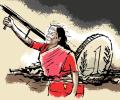
If Nirmala Sitharaman does indeed present a 'never-before' like Budget on February 1, going by her promise, she would create a new benchmark for post-contraction Budgets, observes A K Bhattacharya.

From social engineering to bearing the cost of COVID-19 treatment to financial reconstruction of Tamil Nadu's debt the debutant chief minister is emerging as a leader with a difference, says Shjne Jacob

India and Iraq are likely to sign two agreements in the energy sector and cooperation in water resource management.

'While we note the very strong cyclical recovery in the economy, we believe there is still uncertainty over medium-term prospects.'

'We need to encourage the next generation of farmers to continue in farming'

Prime Minister Narendra Modi on Wednesday launched a Rs 100 lakh crore national master plan for multi-modal connectivity that aims to develop infrastructure to reduce logistic costs and boost the economy. PM Gati Shakti targets to cut logistic costs, increase cargo handling capacity and reduce the turnaround time, Modi said at a function to launch the plan. The plan aims to lend more power and speed to projects by connecting all concerned departments on one platform, he said, adding the infrastructure schemes of various ministries and state governments will be designed and executed with a common vision.

Kaur, the Union Minister of Food Processing Industries, is the only SAD representative in the Modi government.
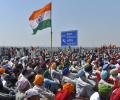
Farmer leaders on Saturday said the protesting unions stand firm on their demand of a complete repeal of the three agri laws and asserted that they are ready for talks with the government, but that should be held without any condition.

Reaching out to the youth of the Kashmir Valley, Prime Minister Narendra Modi on Sunday spelled out initiatives for peace and development, and assured they will not inherit the problems faced by their parents and grandparents.

In power, Mamata Banerjee has tried to bury the ghost of the past, but it might still be work-in-progress. Big-ticket and eye-grabbing (in terms of investment size) projects are still few and far between, reports Ishita Ayan Dutt.

The Union Cabinet on Wednesday approved the signing of a comprehensive economic cooperation agreement, a kind of a free trade pact, between India and Mauritius which is aimed at liberalising norms to boost two-way commerce

The protests brought home the fact that the Sri Lankan public is in no mood for halfway measures, as voices against Rajapaksa 'family rule' and 'securitisation' of the civilian administration began sidestepping the more critical economic crisis, affecting the nation and afflicting the individual, observes Sri Lanka watcher N Sathiya Moorthy.
According to him, the rural economy will play a critical role in the revival process.
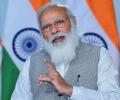
A faltering economy may have led to a re-think on economic strategy. And Mr Modi might think he is politically strong enough to take some risks. But there could be a minefield ahead, observes T N Ninan.

India has received over USD 20 billion in FDI amid the coronavirus pandemic, Foreign Secretary Harsh Vardhan Shringla said on Tuesday, showcasing the country as one of the most attractive destinations for investment globally.

Humans will work far more collaboratively with artificial intelligence for rapid and complex decision-making.
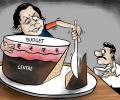
Niti Aayog will prepare the next list of central public sector companies for disinvestment in the next few weeks, its vice chairman Rajiv Kumar said on Thursday and expressed hope that the proposed asset reconstruction and management companies to address banks' bad loan woes will do a good job like the UTI. Days after Finance Minister Nirmala Sitharaman announced the Union Budget for 2021-22 laying out various measures (including disinvestment proposals) to bolster the pandemic-hit economy, Kumar also emphasised that the Modi government has shown consistent commitment for the welfare of farmers and for the improvement of the agriculture sector. "Now the process has begun... We will complete preparation of the next list in the next few weeks, we have got the marching order," Kumar said about the list of public sector companies for the next round of stake sales.

Pulbic banks have no reason to cheer Budget announcement.

Oops, no, onions don't look tempting enough to be part of our investment portfolio for this year! Nor drumsticks!
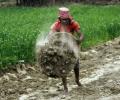
Kiran Vissa, co-convenor of National Alliance for Sustainable Agriculture, said that amendments to the EC Act have nothing to do with farmers' welfare but instead meant to please big players and agriculture companies. This is because small and marginal farmers don't have the storage capacity to attract provisions of the EC Act.
 © 2026 Rediff.com - Advertise with us - Disclaimer - Privacy Policy - Sitemap - Feedback - About us - Terms of use - Grievances